Design patents protect the aesthetic appearance of a product or a portion of a product.[1] Design patents cannot protect purely functional features of a design. Design patents can protect any type of product, including food products, clothing, furniture, household goods, hardware, toys and games, industrial machinery, electronic equipment, product containers and packaging, type fonts, and business forms. U.S. design patents have a term of fifteen (15) years from issuance, which generally cannot be renewed or extended.[2] U.S. design patents are not subject to maintenance fees.
Where only the appearance of a product is important, a design patent may offer adequate protection, but where the construction or function of the product is important, a utility patent may be needed instead of, or in addition to, a design patent in order to adequately protect the invention.
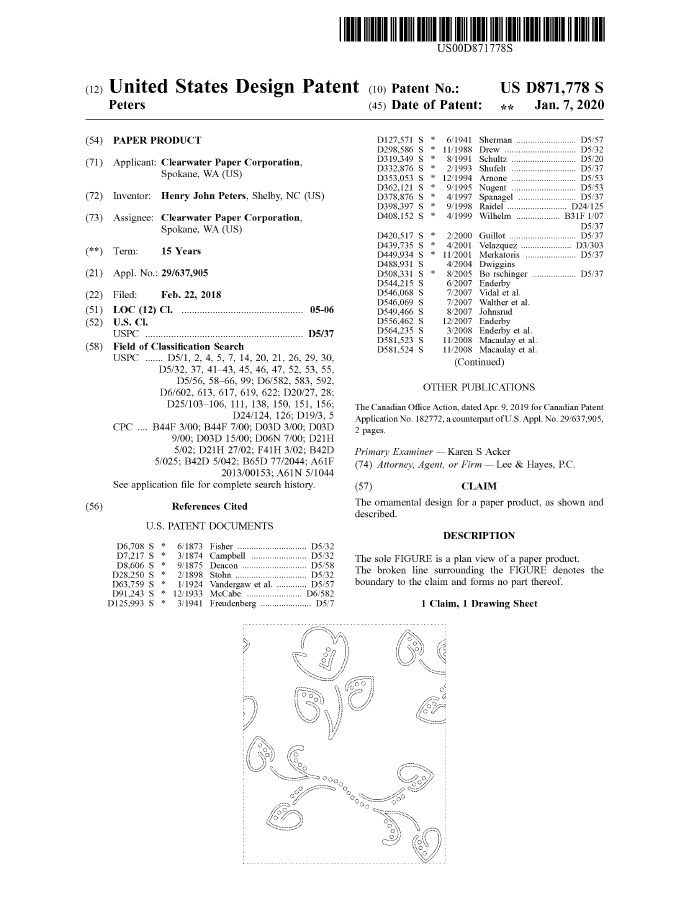
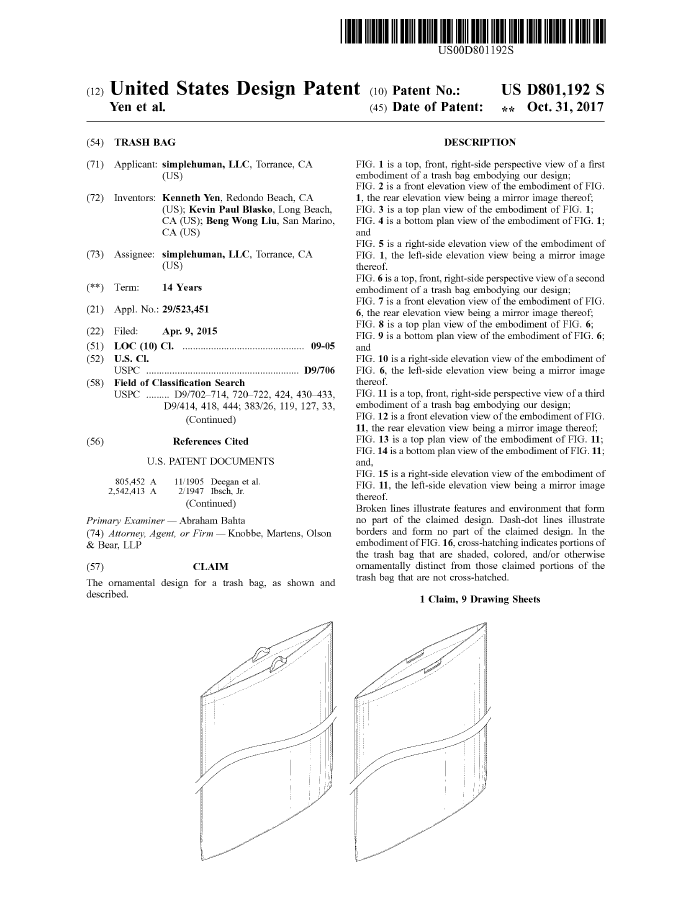
The appearance of virtually any product, or any portion of a product, from packing peanuts to toilet paper, can be protected with design patent:
[1] 35 U.S.C. §171 provides: “Whoever invents any new, original and ornamental design for an article of manufacture may obtain a patent therefor, subject to the conditions and requirements of this title. The provisions of this title relating to patents for inventions shall apply to patents for designs, except as otherwise provided.
[2] 35 U.S.C. §173 provides: “Patents for designs shall be granted for the term of fourteen years from the date of grant.”