A plant patent is granted to an inventor who has invented or discovered and asexually reproduced[1] a distinct and new variety of plant, other than a tuber propagated plant or a plant found in an uncultivated state.[2] The subject matter of the application must be a plant which developed or discovered by applicant, and which has been found stable by asexual reproduction. To be patentable, it is also required that: the plant was invented or discovered and, if discovered, that the discovery was made in a cultivated area; the plant is not a plant which is excluded by statute, where the part of the plant used for asexual reproduction is not a tuber food part, as with potato or Jerusalem artichoke; that the person or persons filing the application are those who actually invented the claimed plant; i.e., discovered or developed and identified or isolated the plant, and asexually reproduced the plant; that the plant has not been sold or released in the United States of America more than one year prior to the date of the application; that the plant has not been enabled to the public, i.e., by description in a printed publication in this country more than one year before the application for patent with an offer to sale; or by release or sale of the plant more than one year prior to application for patent; that the plant be shown to differ from known, related plants by at least one distinguishing characteristic, which is more than a difference caused by growing conditions or fertility levels, etc.; that the invention would not have been obvious to one skilled in the art at the time of invention by applicant.
The grant protects the inventor’s right to exclude others from asexually reproducing, selling, or using the plant so reproduced.[3] Grant of a patent for a plant precludes others from asexually reproducing or selling or using the patented plant. A plant patent is regarded as limited to one plant, or genome. A sport or mutant of a patented plant would not be considered to be of the same genotype, would not be covered by the plant patent to the parent plant, and would, itself, be separately patentable, subject to meeting the requirements of patentability. This protection is limited to a plant in its ordinary meaning.[4] It may be possible to protect plants, seeds, and plant genes with a utility patent. Protection for true breeding seed reproduced plant varieties is offered through the Plant Variety Protection Office, Beltsville, MD. A plant patent has a term of 20 years from the date of filing the application.
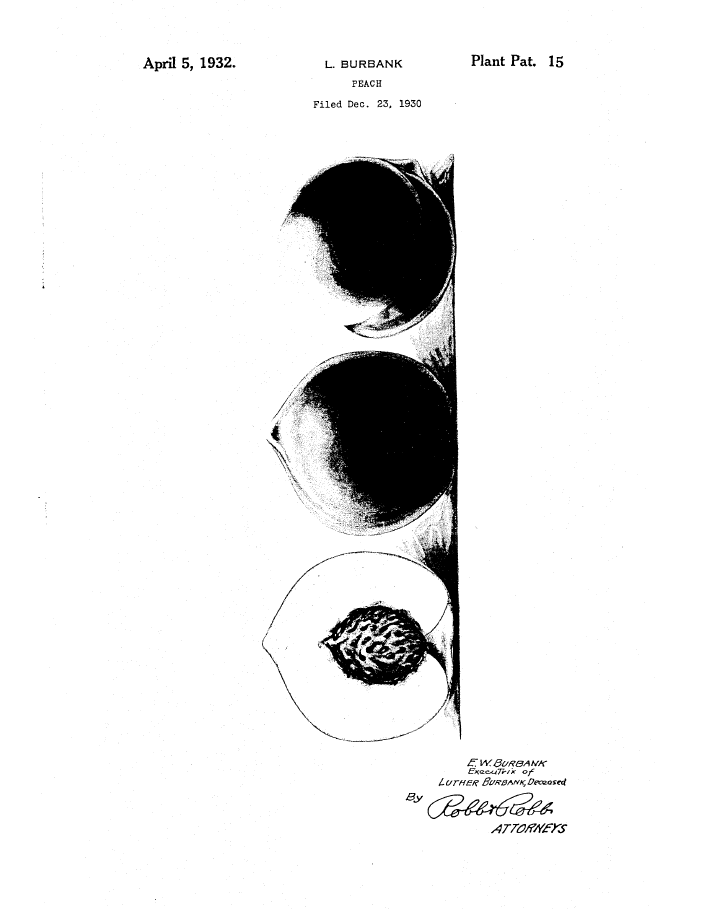
[1] Asexual reproduction is the propagation of a plant to multiply the plant without the use of genetic seeds to assure an exact genetic copy of the plant being reproduced. Any known method of asexual reproduction which renders a true genetic copy of the plant may be employed. Acceptable modes of asexual reproduction would include but may not be limited to: rooting cuttings, grafting and budding, apomictic seeds, bulbs division, slips, layering, rhizomes, runners, corms, tissue culture, and nucellar embryos.
[2] 35 U.S.C. §161 provides: “Whoever invents or discovers and asexually reproduces any distinct and new variety of plant, including cultivated sports, mutants, hybrids, and newly found seedlings, other than a tuber propagated plant or a plant found in an uncultivated state, may obtain a patent therefor, subject to the conditions and requirements of this title. The provisions of this title relating to patents for inventions shall apply to patents for plants, except as otherwise provided.”
[3] 35 U.S.C. §163.
[4] A living plant organism which expresses a set of characteristics determined by its single, genetic makeup or genotype, which can be duplicated through asexual reproduction, but which can not otherwise be “made” or “manufactured.” Sports, mutants, hybrids, and transformed plants are comprehended; sports or mutants may be spontaneous or induced. Hybrids may be natural, from a planned breeding program, or somatic in source. While natural plant mutants might have naturally occurred, they must have been discovered in a cultivated area. Algae and macro fungi are regarded as plants, but bacteria are not.