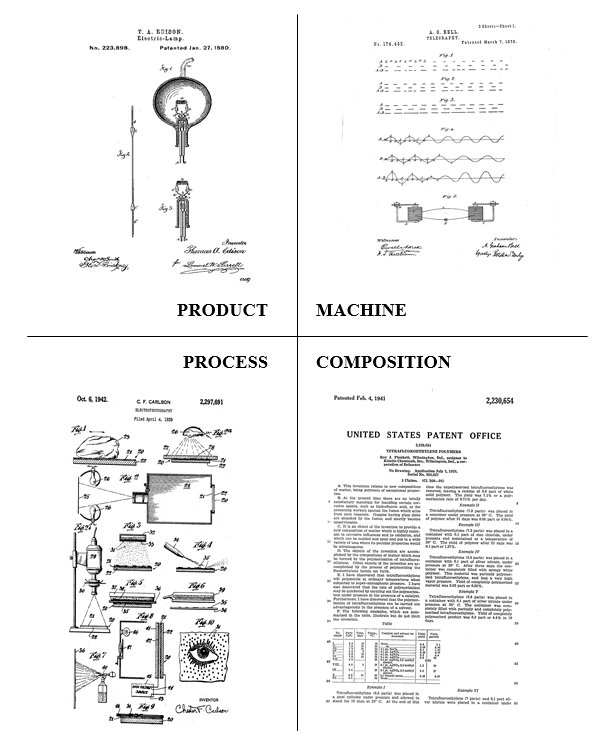
A U.S. utility patent protects four broad categories of inventions: products, machines, compositions of matter, and methods or processes.[1] The U.S. Supreme Court has observed that in setting up these broad categories, Congress intended to include “anything under the sun that is made by man.”[2] Virtually any invention that falls within one of these categories is proper subject matter for a utility patent in the United States. The subject matter of utility patents in other countries is not always as broad. For example some countries exclude pharmaceuticals, medical procedures, food products, or other categories of inventions from patent protection for public policy reasons. A U.S. utility patent application has a term of 20 years from the filing date.[3] This term can be extended because of Patent Office delays in the prosecution of the application, and in certain other circumstances.[4] Maintenance fees must be paid after 3½, 7½, and 11½ years from issuance or the utility patent will expire at 4, 8, or 12 years, respectively.[5]
[1] 35 U.S.C. §101.
[2] Diamond v. Chakrabarty, 447 U.S. 303 (1980).
[3] 35 U.S.C. §154(a)(2) provides in part: “Subject to the payment of fees under this title, such grant shall be for a term beginning on the date on which the patent issues and ending 20 years from the date on which the application for the patent was filed in the United States or, if the application contains a specific reference to an earlier filed application or applications under section 120, 121, or 365(c) of this title, from the date on which the earliest such application was filed.” However patents issuing on applications filed before June 8, 1995, have a term of the longer of 17 years from issuance or twenty years from filing.
[4] See 35 U.S.C. §154(b).
[5] See 35 U.S.C. §41(b).